Play a song or two with us
Thirty minutes in our tent, or we come to your jam. Here is what happens, in order.
Put your name on the sheet
Sign-up sheets are at our tent all weekend. Bring your band, or a couple of pickers. Jamming in the campground? Tell us where your camp is and we will come to you.
Play for about 15 minutes
Up to three players wear small sensors that read heart rhythm and movement. Play whatever you would play anyway. We are not grading anybody's playing.
Answer a short survey
The whole slot takes about 30 minutes. Taking part is voluntary, and you can stop any time, no reason needed.
The weekend set list
Where to find us at the Roundup.
After the Band Scramble
Names are drawn at 2:45, and the scramble bands play the main stage at 5:00 and 6:00. Scramble bands and anyone else are welcome at our tent afterwards. Later in the evening we are out at the campground jams.
Campground night
Our tent hosts workshops on Saturday, so look for our table and sign-up sheets there all day. After the headliners, and while the Barn Dance gets going at 7, we come round the campground jams. Listen for us from the stage.
Our tent, all day
A short talk on what we found at Pickin' in the Pines, then sessions through the afternoon. Band contest finalists (finals at 10:00) and everyone else, come find us.
Our tent is in the lower area of the festival grounds. Session times will be posted on the tent.
Sign up the old way
Paper sheets, at our tent all weekend and at our table in the workshop tent on Saturday. Write your name, your band or your camp, and a time that suits you. Pickers in the campground can also just wave us over.
to 7
Pickers, in the desert
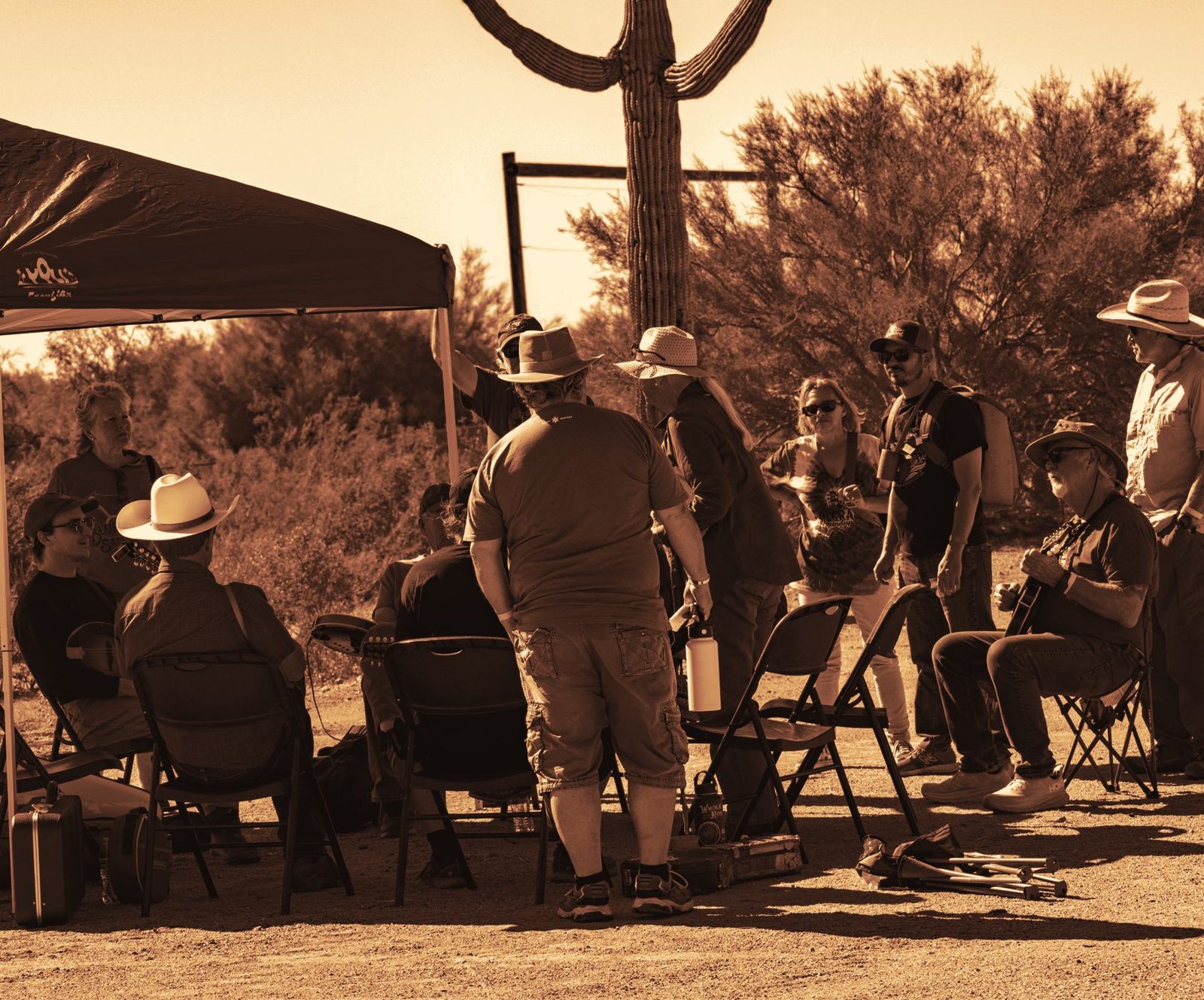
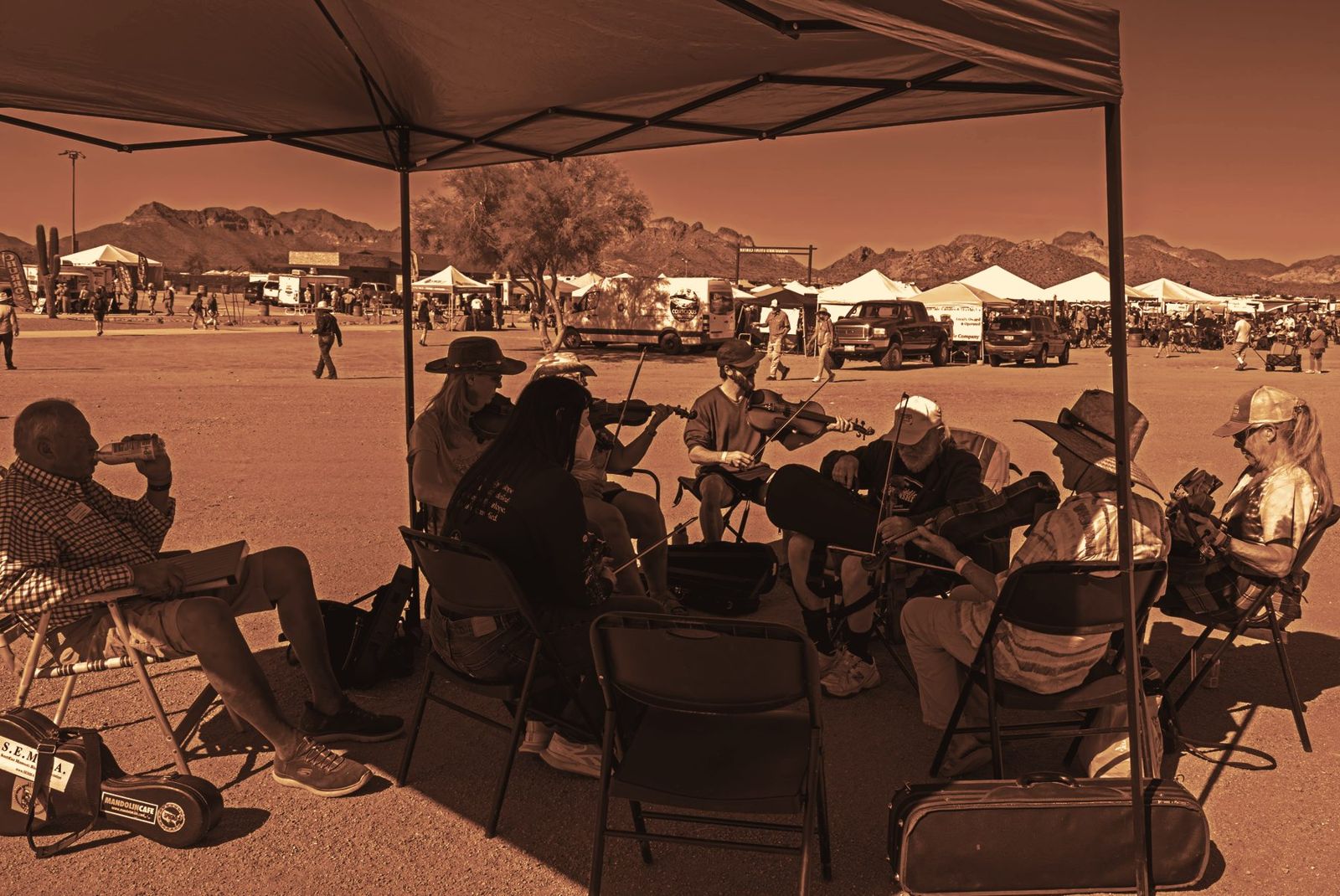
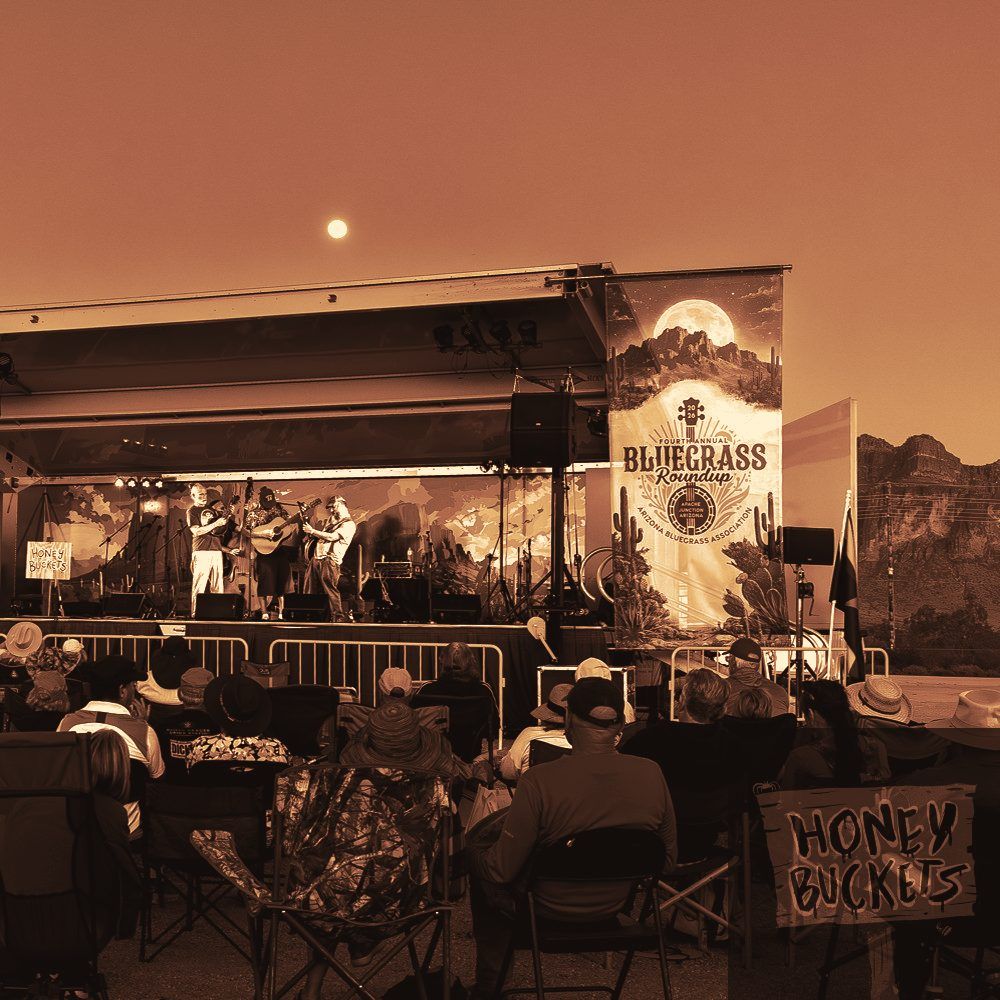
Photos from the 2026 Roundup, courtesy of the Arizona Bluegrass Association.
What we are curious about
Making music together may be one of the oldest ways people have of building cooperation. A bluegrass festival, where strangers form a circle and play as one within minutes, is about the best place on earth to study it.
Do bodies sync up?
When a jam clicks, do the players' heartbeats and movements line up as well as their timing?
How does a jam change us?
Pickers say a good session leaves them different somehow. We want to know whether that shows up in the body.
What makes a jam work?
Why do some circles fall apart while others pull people in and keep them there for hours?
How this started
The first Your Brain on Bluegrass
Athena Aktipis and Mike McBeath, ASU professors and both musicians, ran a romp through the science of music at Pickin' in the Pines in Flagstaff.
From talking to measuring
At Pickin' in the Pines in September we recorded 13 groups: touring bands, campground jams, and groups with first-timers. The heart and movement data are being scored now.
The Roundup
Apache Junction, with the Arizona Bluegrass Association. More players, more jams, and a first look at what we found.
groups recorded at Pickin' in the Pines, September 2026
We will post what we find here, even if the answer is no.
Good to know
Do I have to be good?
No. We are interested in what happens between players at every level, from a first jam to a touring band.
What gets measured?
Heart rhythm and movement, from small sensors on up to three players. We also record the sound and video of the playing, so the music can be lined up with the body.
Can I just watch?
Yes. Come by the tent and see the sensors at work. Ask us anything before you decide.
Will I hear what you find?
Yes. We will post what we learn here, even if the answer is that nothing syncs up.
The research team
- Athena AktipisASU professor and director of the Cooperative Futures Institute. Cooperation scientist and multi-instrumentalist.
- Tamera SchneiderASU professor of psychology. Runs the physiological recording.
- Greg BryantUCLA professor. Studies the sound of people coordinating.
- Jessica Phillips-SilverMusic neuroscientist. Studies how we move in time together.
- Scout Mastick and Alex VandenbergASU graduate researchers.